


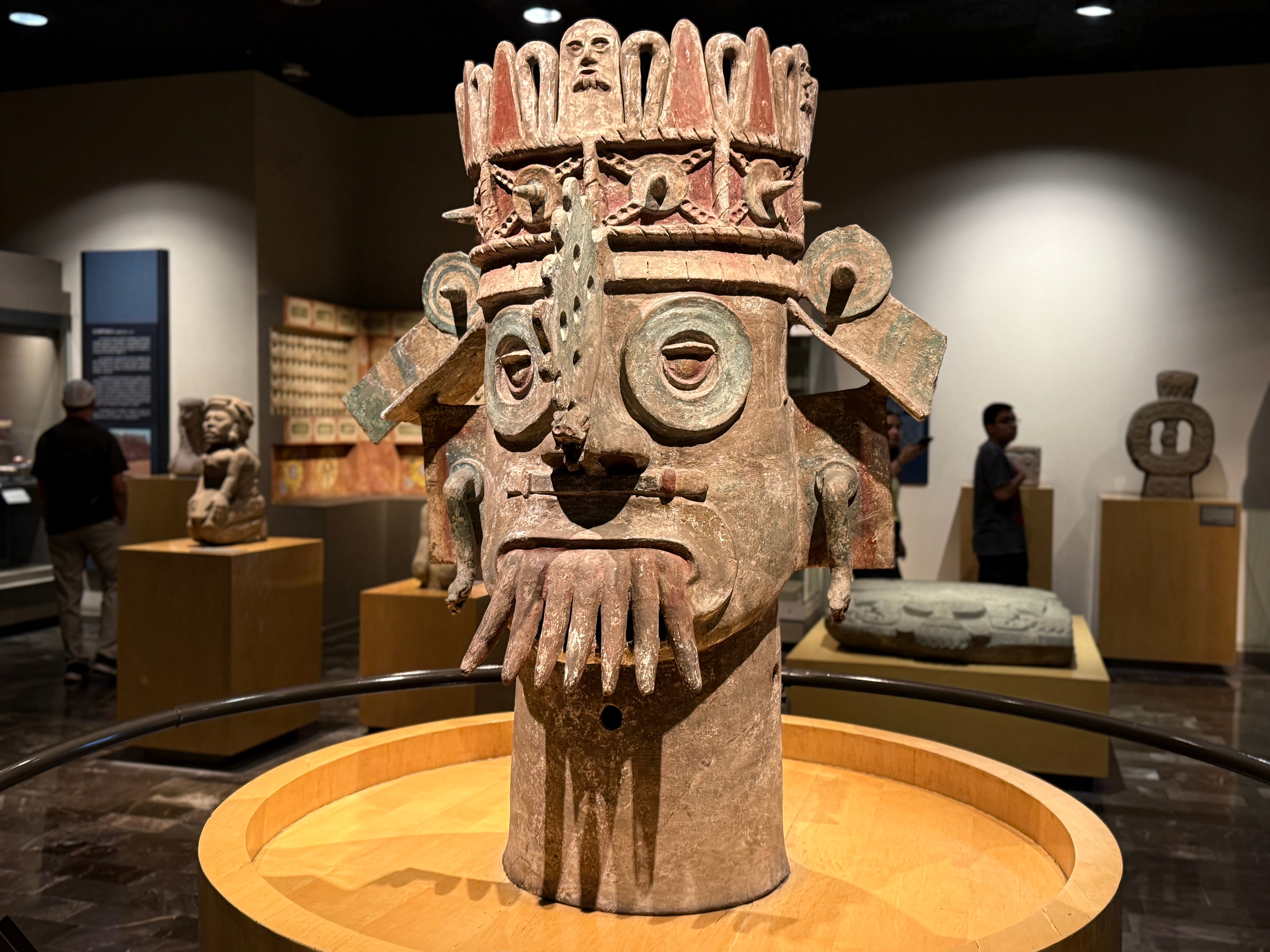
The Museo Nacional de Antropología is one of the top sites in Mexico City. It’s worth a visit even if you aren’t in CDMX for long. Don’t expect to see everything in a single visit—there’s too much to take in.
Here’s what to know.
📅When should you visit the Anthropology Museum?
The best days to visit are Tuesday through Friday. Saturdays are busier but still manageable.
It’s closed on Mondays.
It’s busy on Sundays because it’s free for Mexican citizens and residents on Sundays.
We’ve found that the security checks and ticket lines can be long on Sundays, but once you’re inside, the museum isn’t very crowded. It’s really big, so there’s plenty of room to spread out.
🚃How do you get there?
We recommend rideshare (Uber or Didi). You’ll be walking a lot inside the museum, so don’t walk there unleass you’re already nearby. Save your legs for the exhibit halls.
Other options:
Metro: Line 7 to Auditorio station or line 1 to Chapultepec station
Metrobus: Line 7 to Antropología stop (closer to the museum than the Metro)
🎟️How do you buy tickets?


You can walk up and buy tickets at the door for $210 MXN ($12.40 USD). We’ve never heard of it being sold out, but there might be a line.
You can also buy tickets online ahead of time, as long as you know what day you want to visit.
We don’t recommend buying tickets from a third party site unless they include a guide or other attractions. The markup doesn’t get you any value.
Good to know: You’ll need to check large bags, packages, and umbrellas at the coat check or rent a locker downstairs to store your things.
Planning a Mexico City trip? Download Eternal Spring: Our Guide to Mexico City 2026 ($9.99) for neighborhood maps, daily itineraries, and curated restaurant lists right on your phone.
⏲️How much time should you plan to spend at the Anthropology Museum?
That depends on your interest level and stamina. There’s a lot to see, and you could spend a full day or even longer.
But we find that after two to three hours, our energy starts to fade.
The restaurant Sala Gastronómica is inside the museum, so you can divide up your visit with breakfast, lunch, or a sweet snack. Reservations recommended.


👀What should you see?
The museum’s 11 first-floor exhibit halls surround a central courtyard with a fountain and a decorative pool. They focus on different cultures and time periods in pre-Hispanic Mexican history. Many of them also have garden exhibits that continue outside and are worth a look.
Don’t miss these three halls:
Teotihuacán: Hall 5
Mexica/Aztec: Hall 7
Maya: Hall 9
Be sure to see:
El Paraguas (The Umbrella) fountain: It’s right past the entrance. You can’t miss it.
The Aztec Sun Stone: Impressive for its sheer size and intricate detail.
Olmec heads: There are replicas of these heads all over the world. Two of the 17 that have been discovered are here.
Replica temples: Life-sized reproductions provide context and scale.
🚶➡️Do you need a guide?
We’ve never toured with a guide, and you can get a lot of information from the signage, much of which is in English.
That said, many people find that a guide gives them a better understanding of the exhibits and their significance.
If you’d like to tour with a guide, the museum offers tours Tuesday through Saturday. Ask about availability at the visitors’ desk.


👎What should you skip?
The first three halls (on the right as you enter) cover anthropology going back to the earliest days of humans. They mostly aren’t specific to the cultures of Mexico. You could start with the fourth hall, or start on the left and go through the halls clockwise.
And as much as I love the cultural exhibits on the second floor, like costumes, tools, and musical instruments, I’d skip that floor entirely on a first visit. I probably visited the museum a half-dozen times before I made it up there.
🌳What’s close by?
Right outside the museum, there’s a row of food stands inexplicably selling mostly hot dogs and hamburgers. They were among the worst we’ve ever had, and it’s tough to screw up a hot dog.
If you’re in this area and you need lunch, you’d be better off heading over to one of the stands or restaurants in Chapultepec Park.
But we saw two interesting performances in the immediate area:
Los Voladores/The pole flyers: Five men in traditional clothing climb a tall pole, bringing ropes with them. One stays at the top and plays music, while the others swing through the air attached to the ropes, circling the pole until they reach the ground. Some places say they perform hourly on the weekends, but I can’t confirm that for sure.
Aztec fire dancers: Nearby, we saw these dancers, dressed in large feathered headdresses, performing a traditional dance.
You could pair your visit with:
Chapultepec Castle: The castle is a fascinating site to see on its own, plus the hilltop locations means you have great views of Mexico City. Just keep in mind that pairing this with the Anthropology Museum means you’ll be walking a lot.
Chapultepec Park: Explore the pathways, green spaces, lakes, and stands selling everything from Lucha Libre masks to cotton candy.
Modern Art Museum: A museum with a much more contemporary focus, the Museo de Arte Moderno, is a short walk away.
Paseo de la Reforma: This major thoroughfare has some significant monuments, like the Angel of Independence and the Diana the Huntress fountain.
💜 More Mexico City with Eternal Spring
🍷 Need dinner plans after your museum visit? Read our Mexico City Reservation Cheat Sheet to book top tables like Pujol, Contramar, and Handshake Speakeasy.