


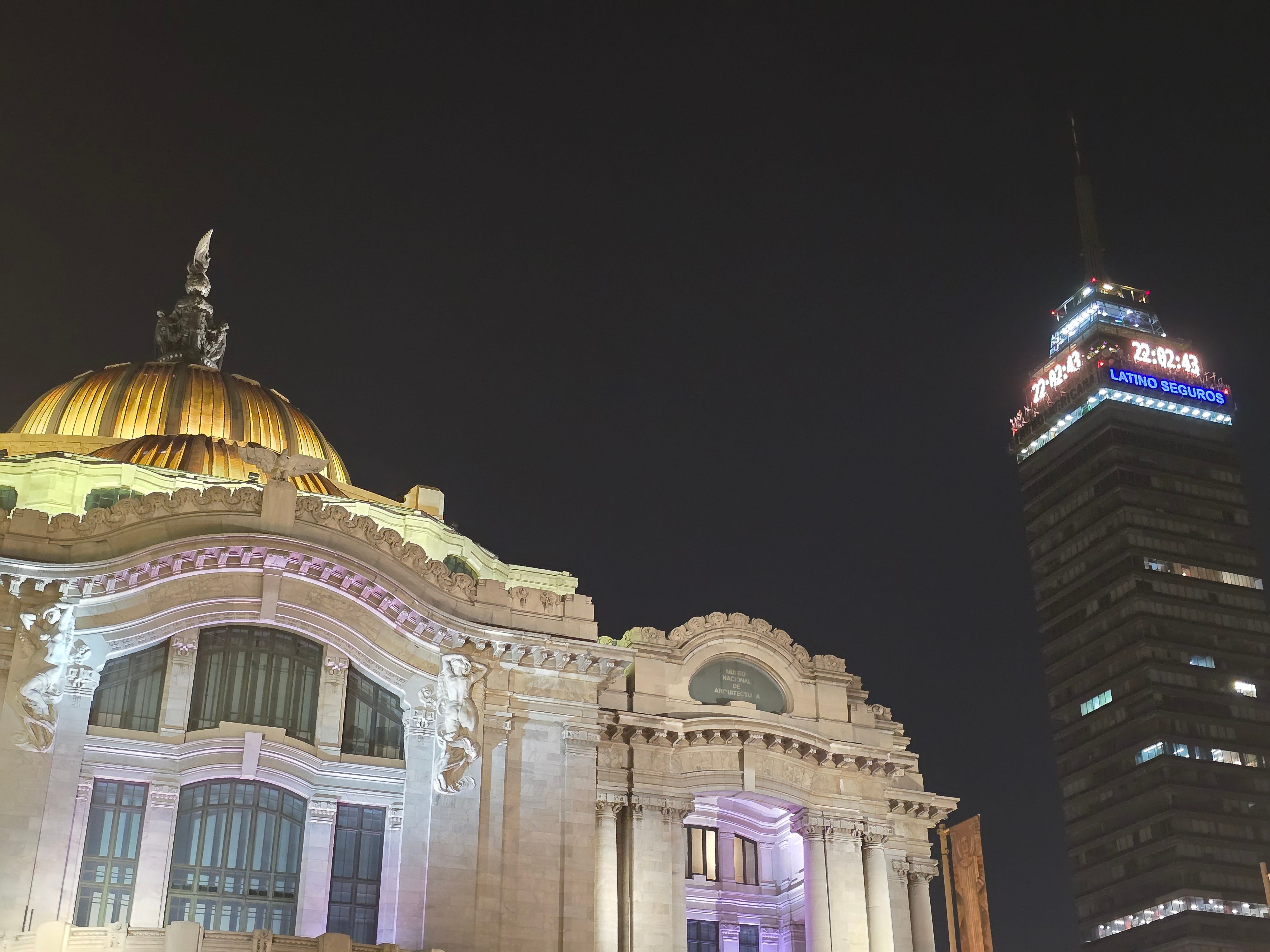
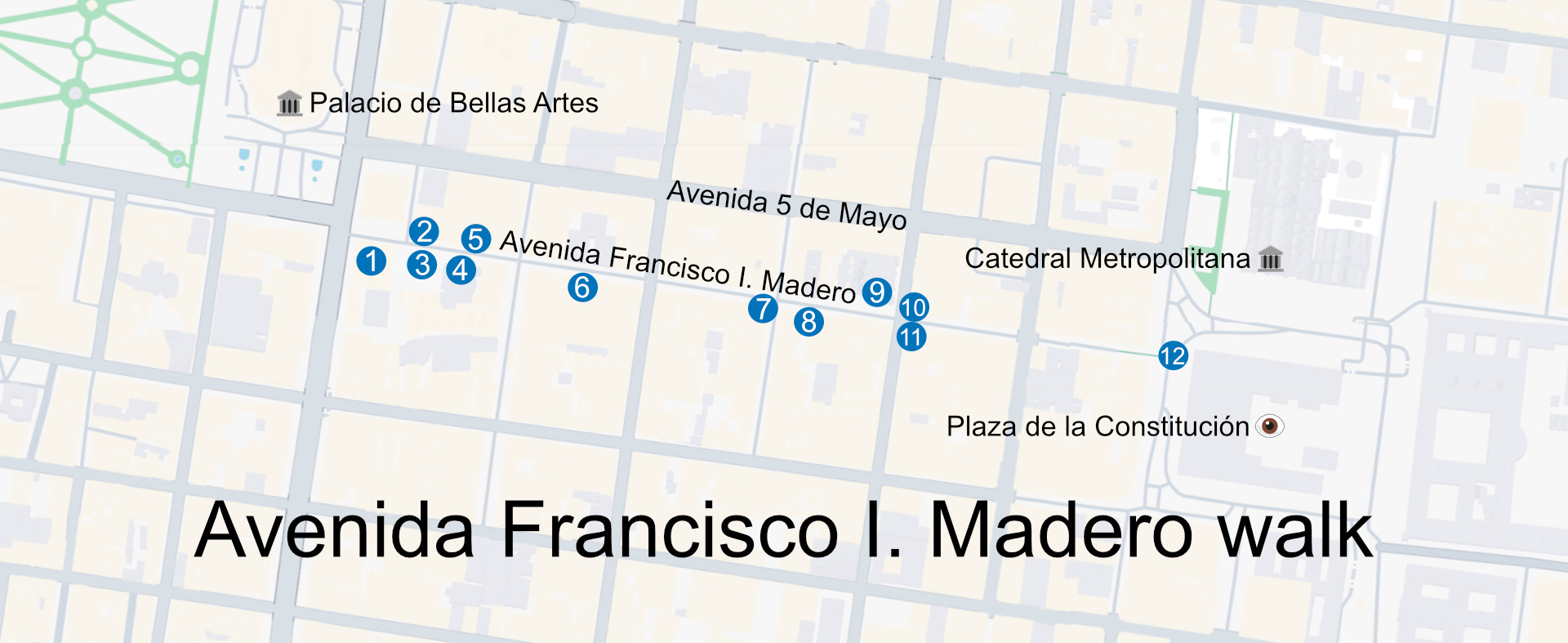
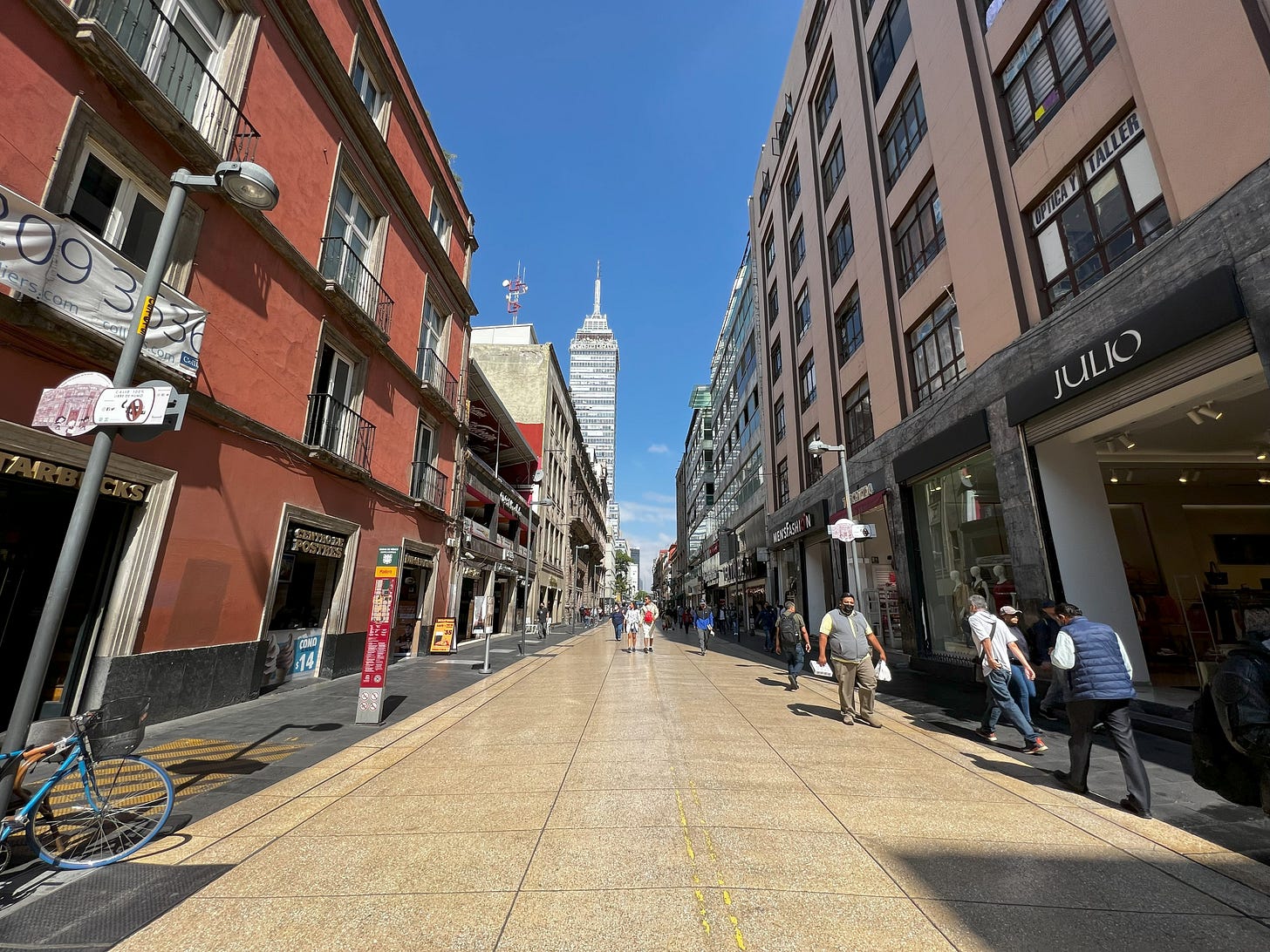
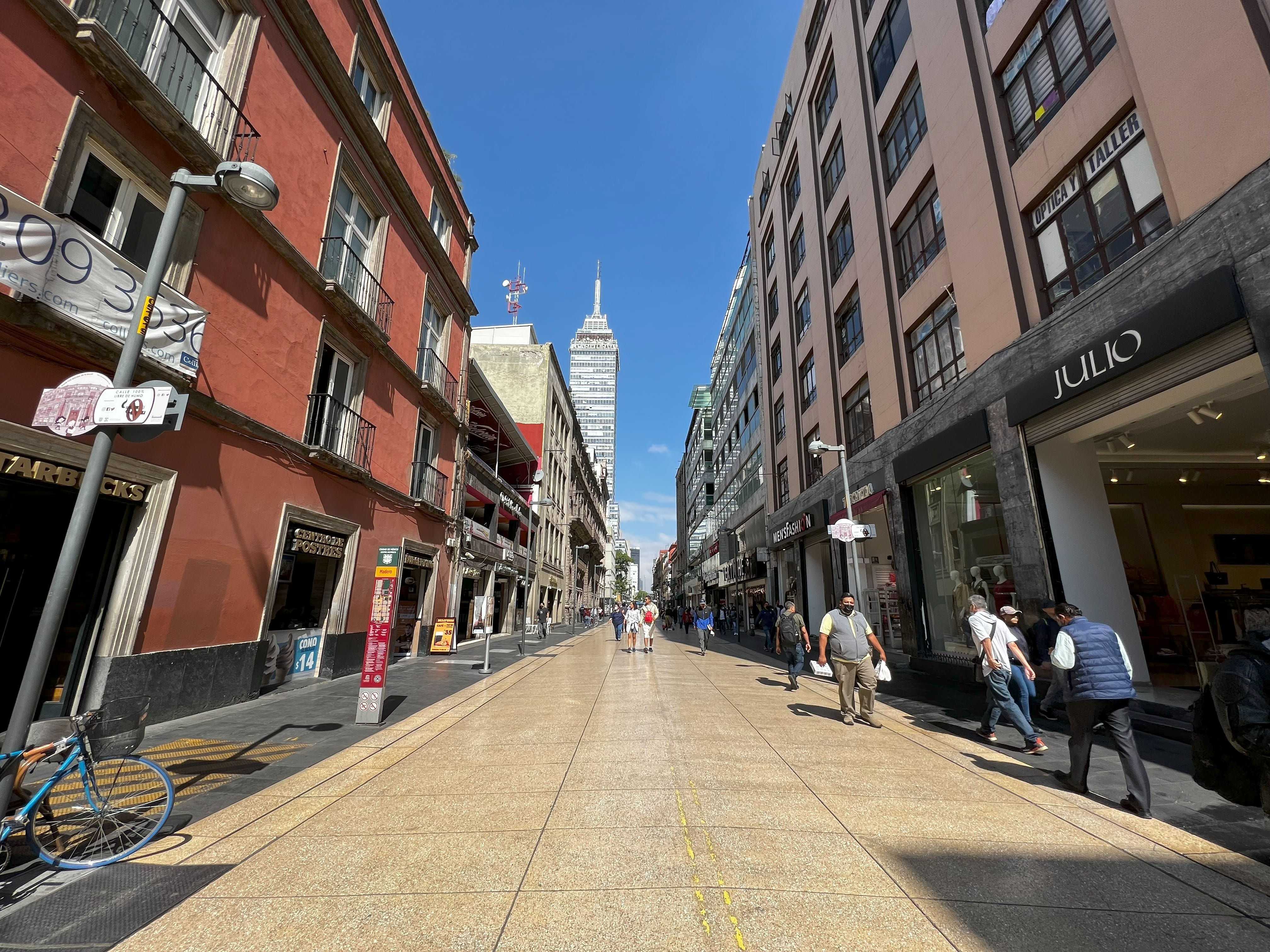
Running from 🏛️Palacio de Bellas Artes in the west to 👁️Plaza de la Constitución (Zócalo) in the east, Avenida Francisco I. Madero is a pedestrian-only street with lots to see and do. You can walk in either direction, of course, but we’ll start at Bellas Artes and head east.
This is an excerpt from our downloadable book, Eternal Spring: Our Guide to Mexico City, which is designed to work seamlessly on your phone, e-reader, tablet, or computer. Use it to plan your itinerary, and refer to it any time you need to when you’re in Mexico City.
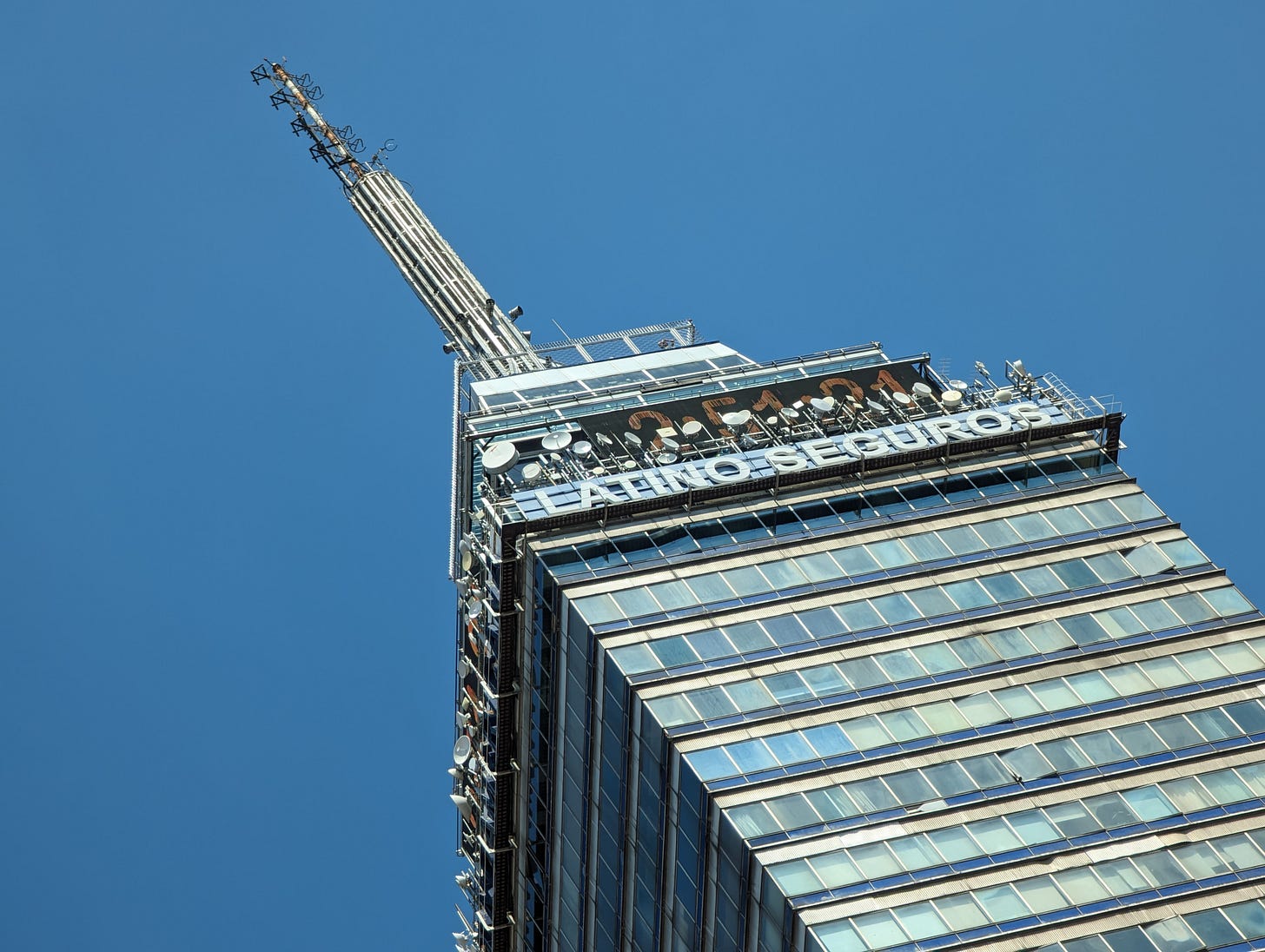
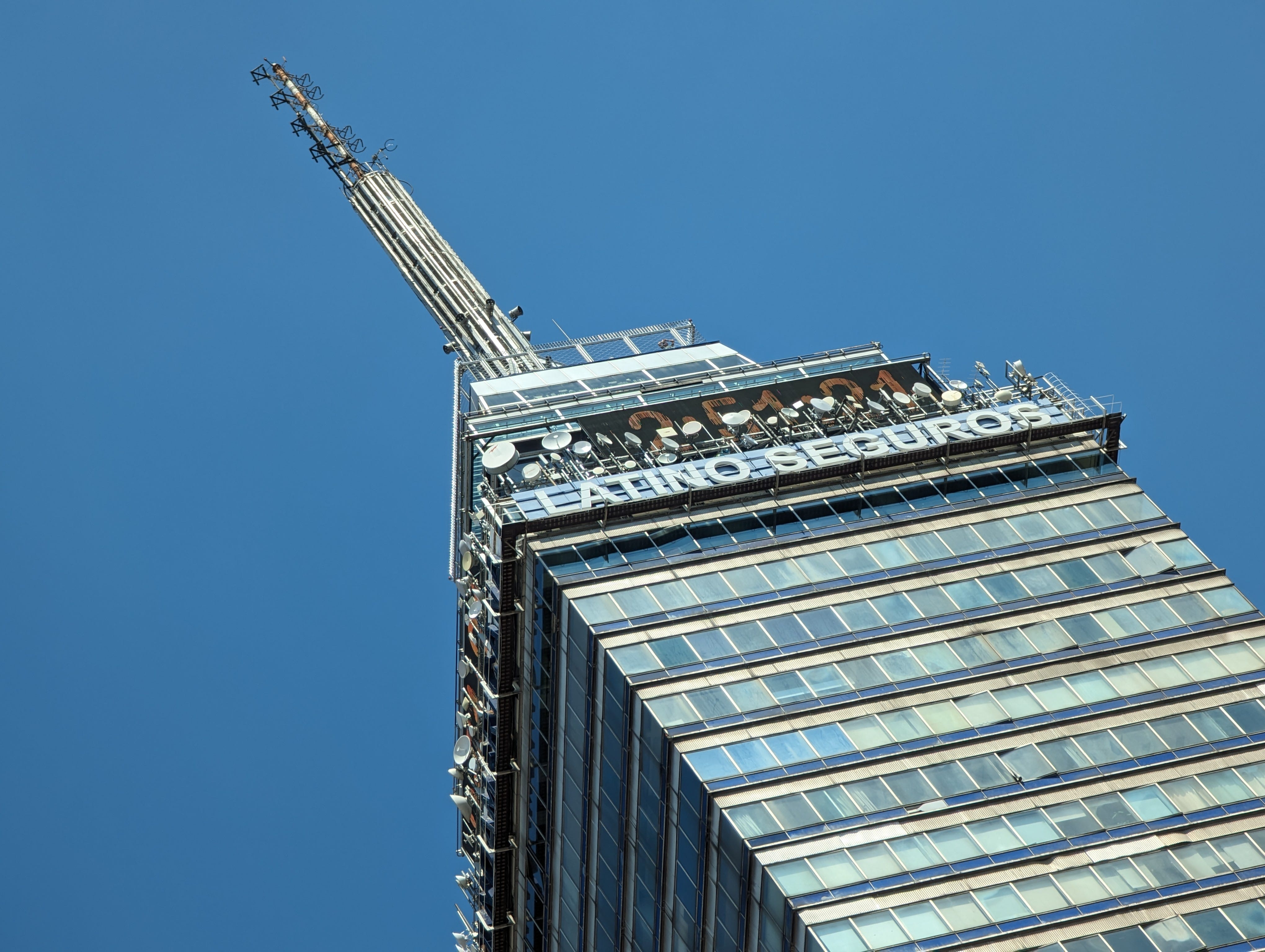
👁️Torre Latinoamericana is impossible to miss, but it’s just to the southeast of 🏛️Palacio de Bellas Artes across the busy Eje Central Lázaro Cárdenas. The entrance is on the west side of the building. If you haven’t gone up to the Mirador to see the views, consider doing so now.
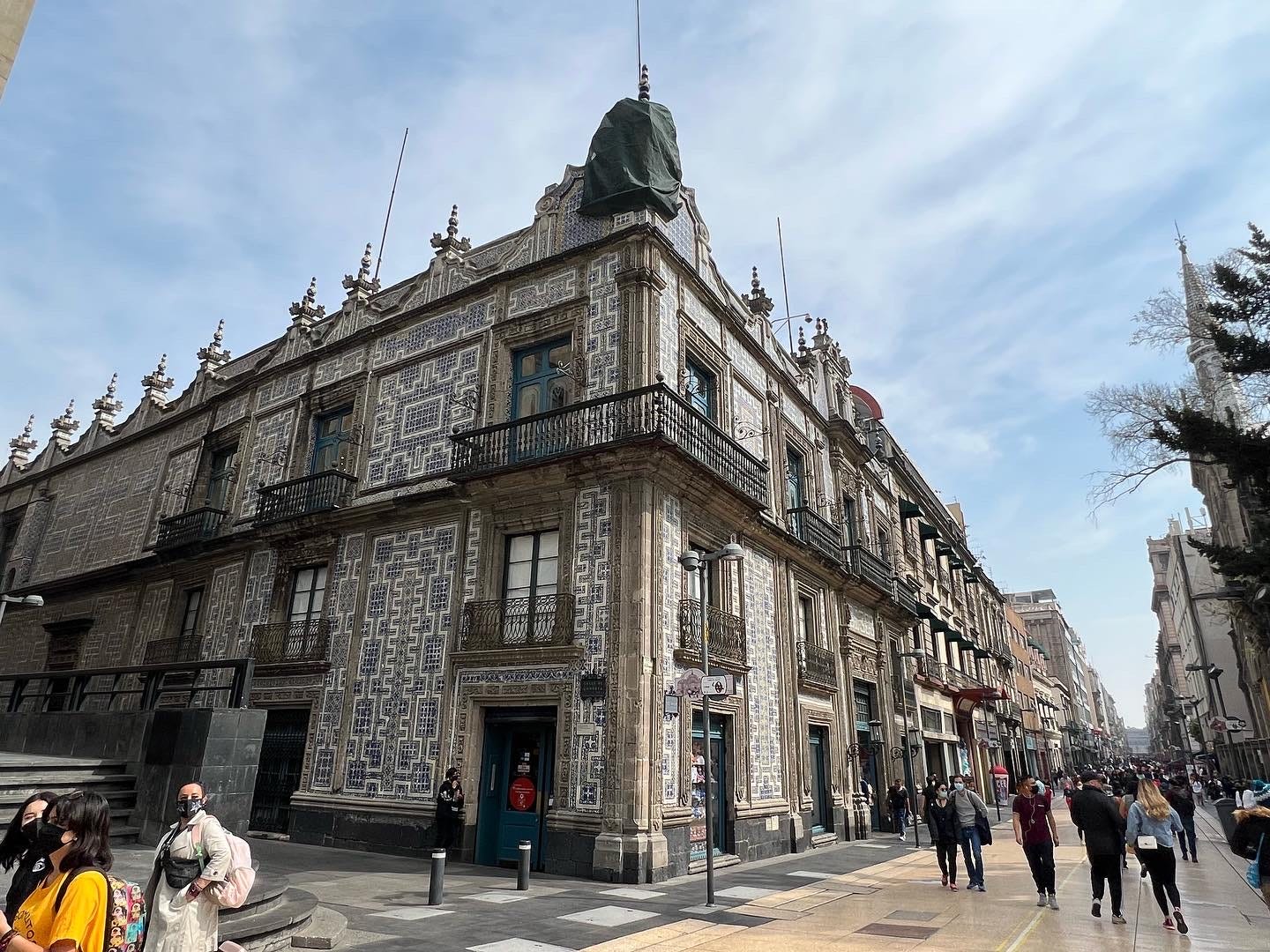
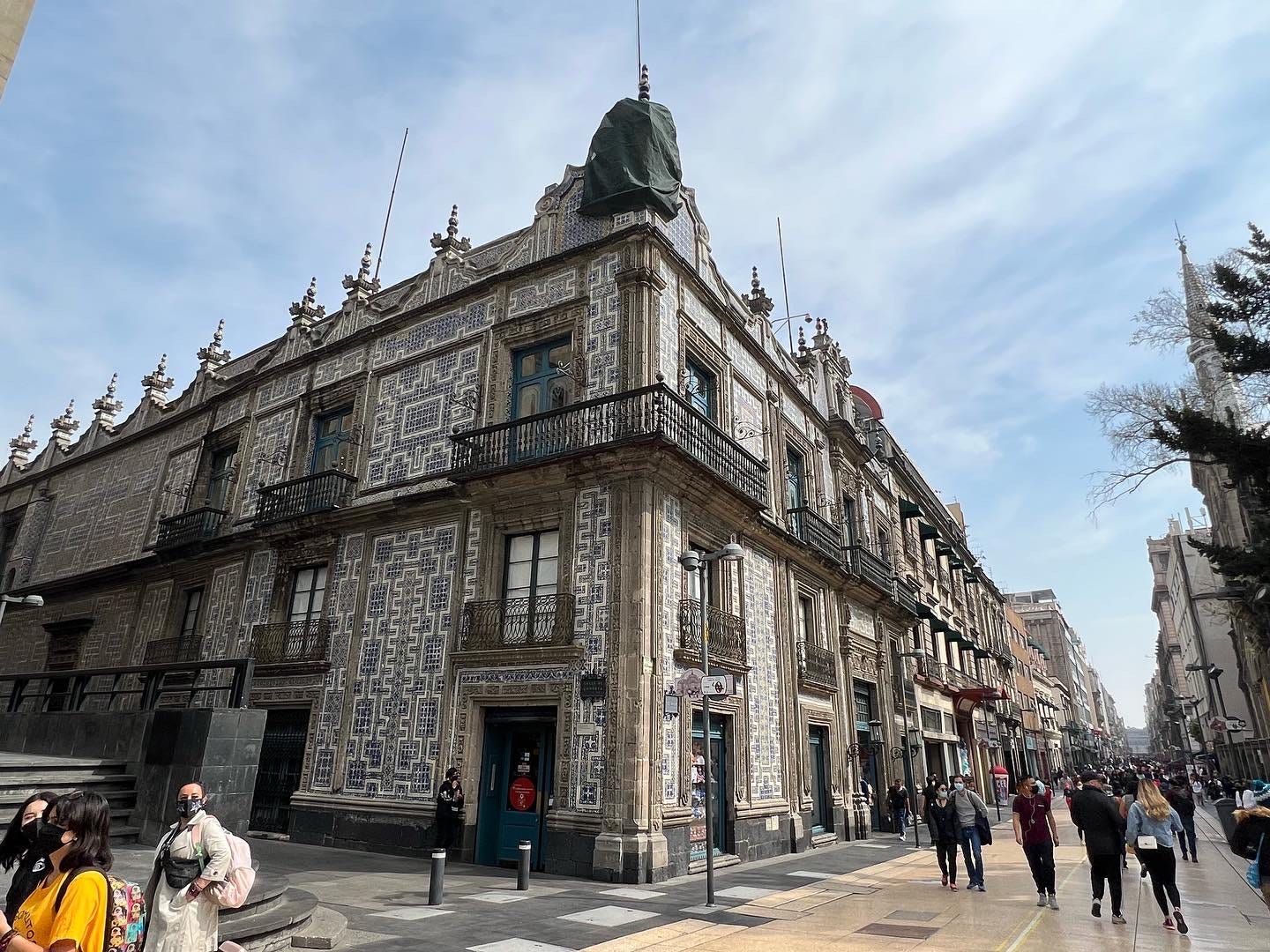
Head onto Avenida Francisco I. Madero and walk east. On the north side of the street, you will find the iconic 👁️Casa de los Azulejos, with its blue tiled walls and, inside, a Sanborns restaurant in a gorgeous open courtyard. Be sure to look around even if you aren’t hungry or thirsty.
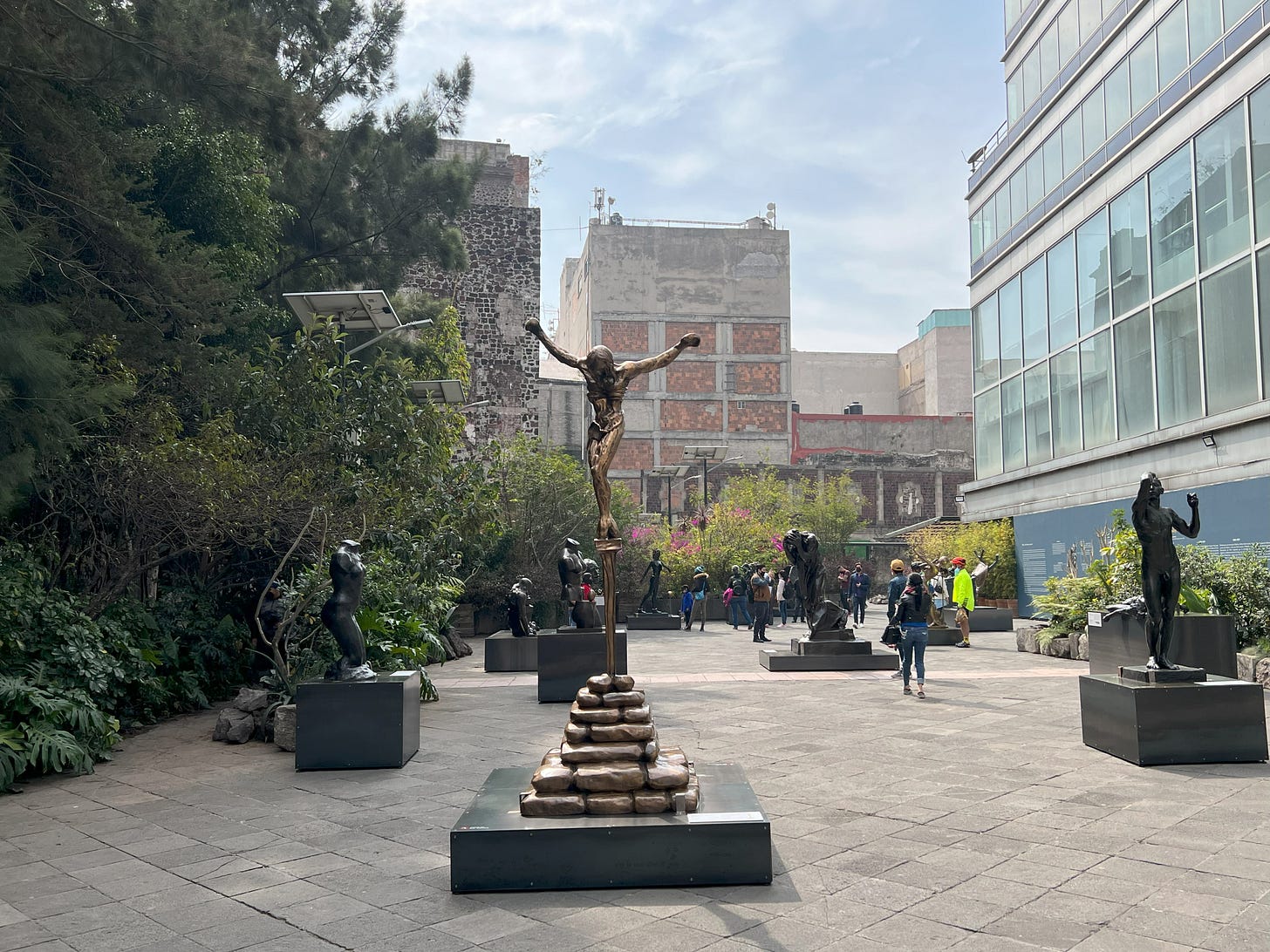
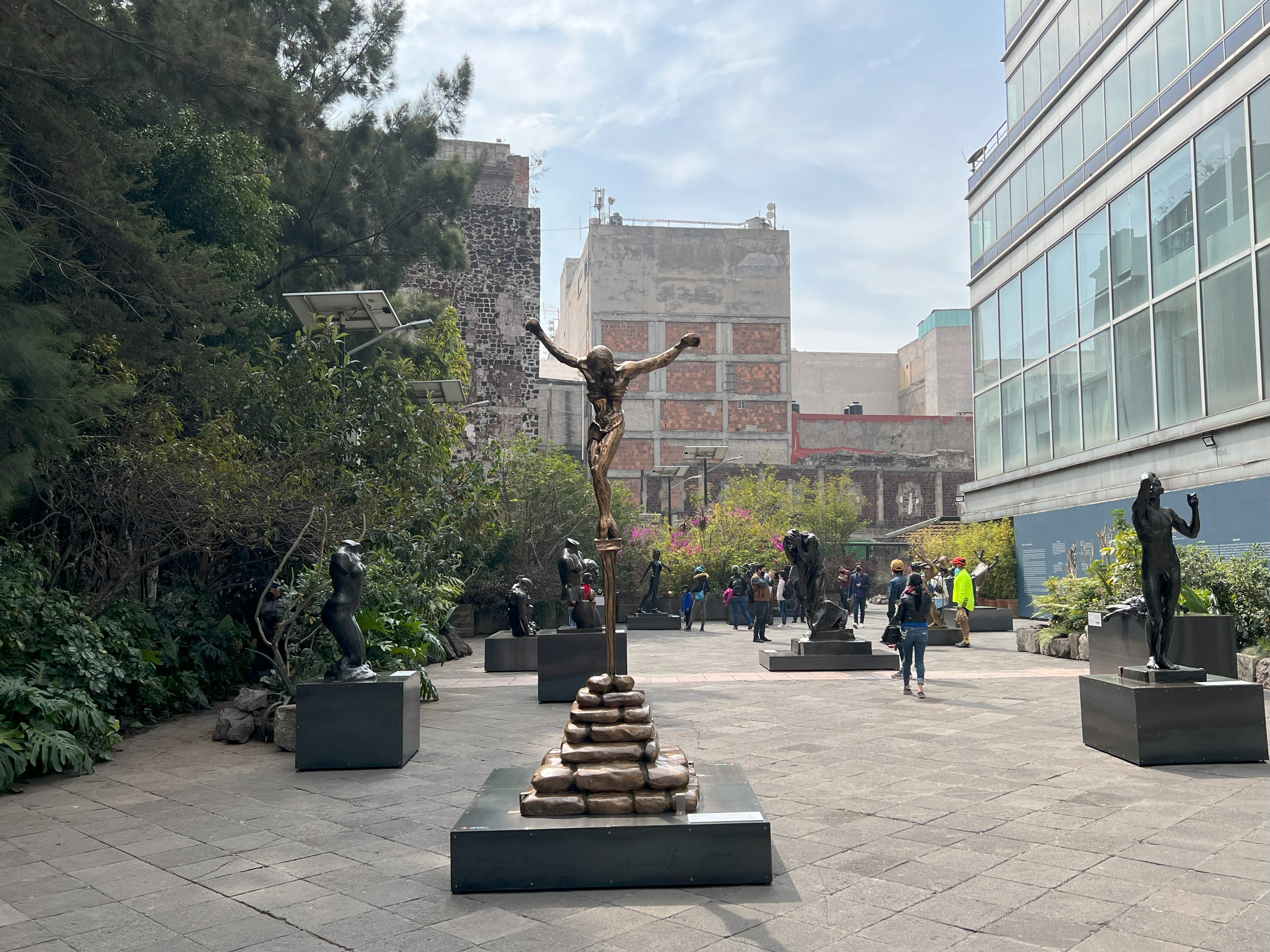
On the south (right) side of the street, you’ll see the📱Atrio de San Francisco, a free outdoor public space with a garden that hosts temporary expositions from the Museo Soumaya that change regularly.
Just past the Atrio is the📱Templo Expiatorio Nacional de San Felipe de Jesús, a Catholic church with an open courtyard to the west that sometimes hosts plays or other small events.
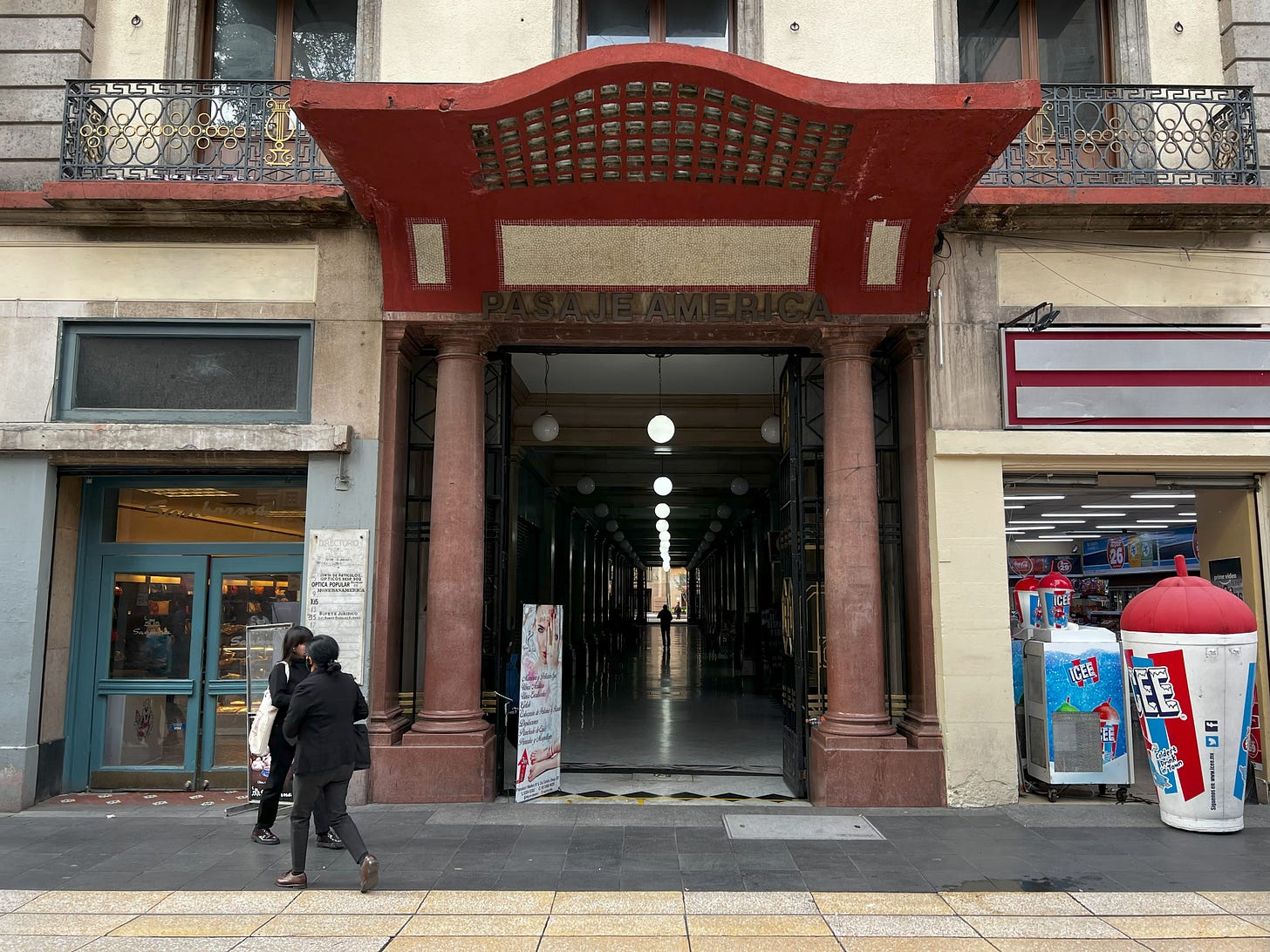
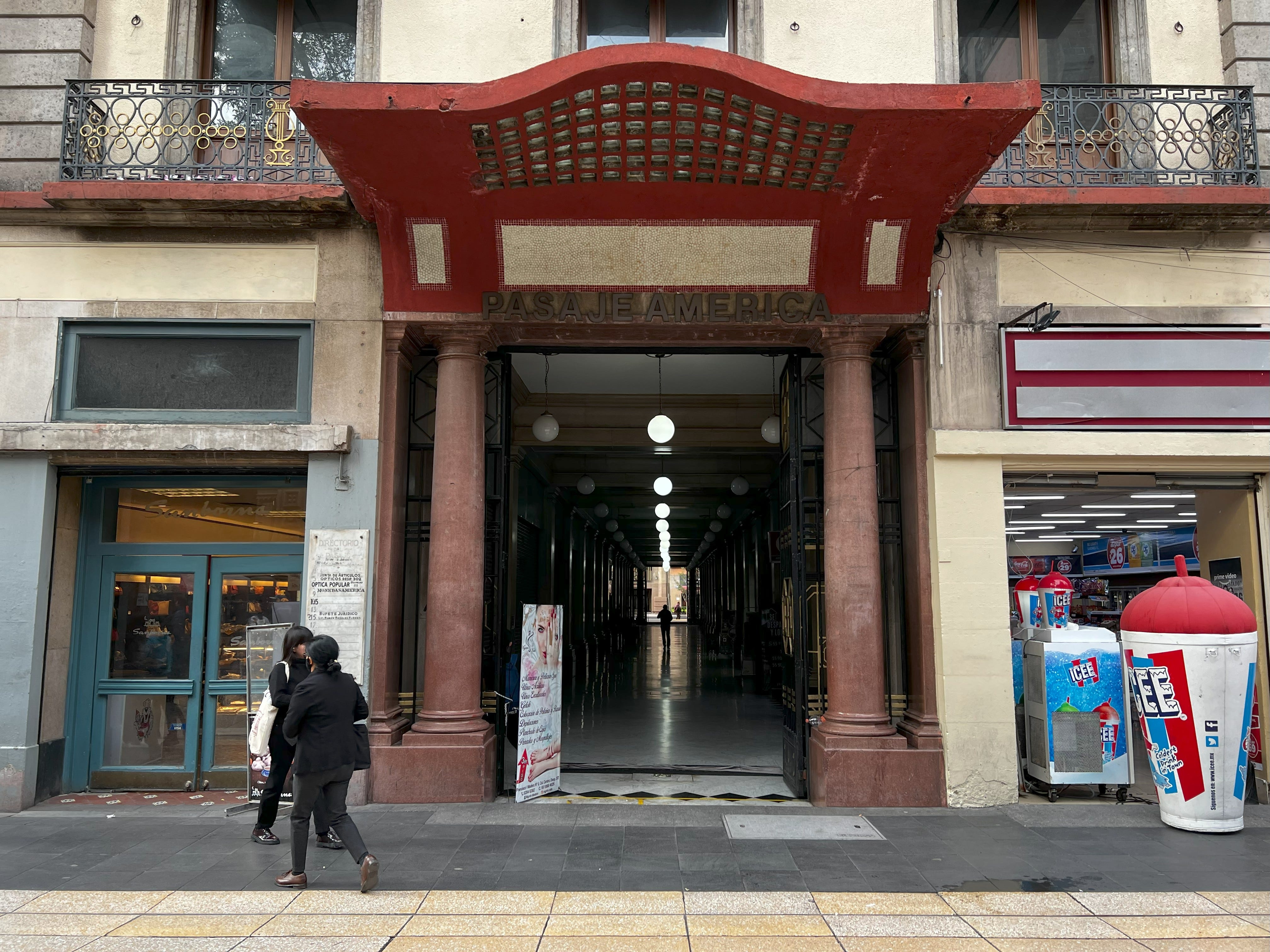
Look for the📱Pasaje America, an internal passage through a large block-sized building with some shopping, mostly uninteresting.
After crossing Calle de Filomeno Mata, continue east. On the south (right) side of the street, you will see📱Palacio de Cultura Banamex - Palacio de Iturbide, which features unique architecture and a free museum.
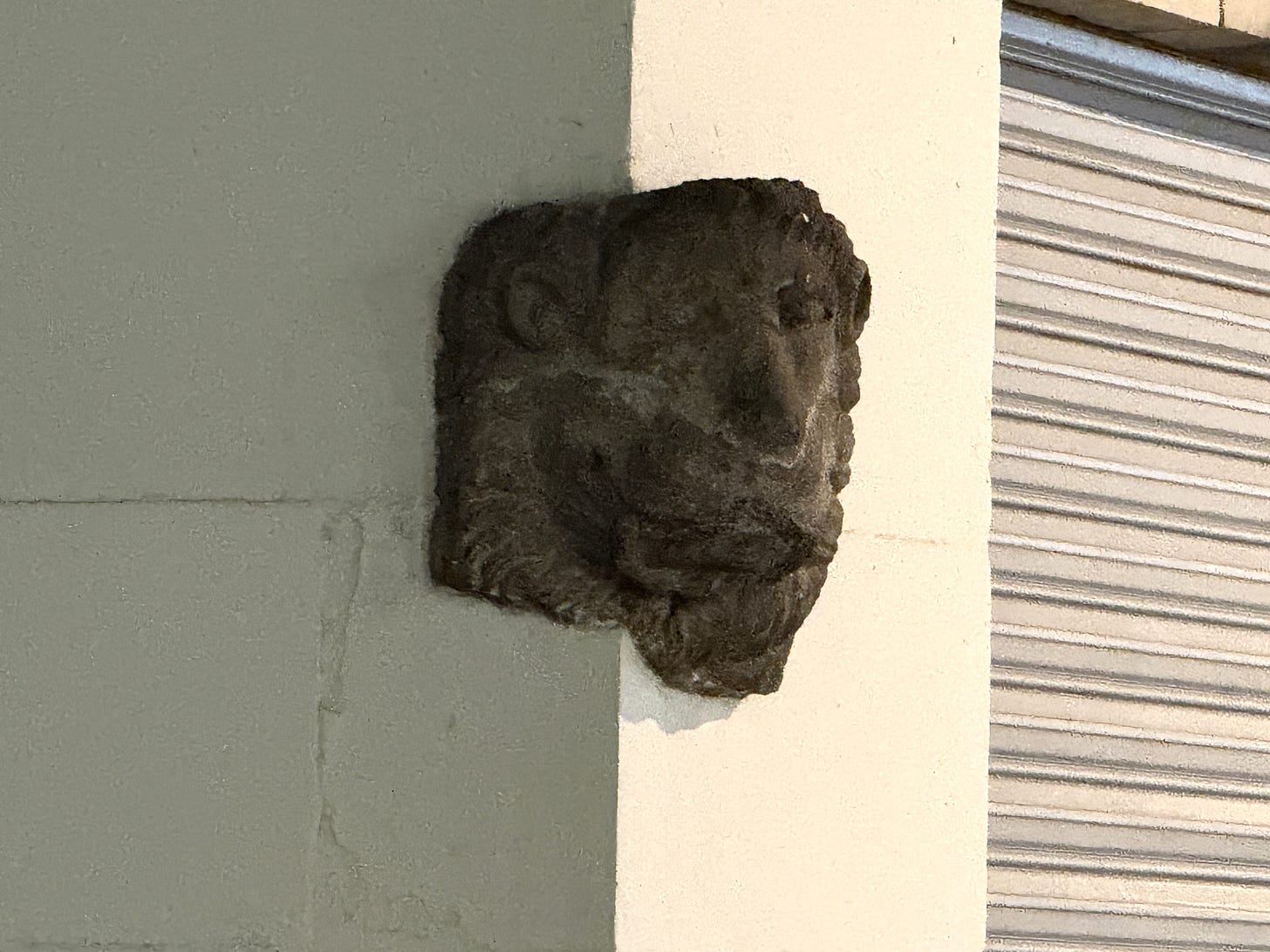
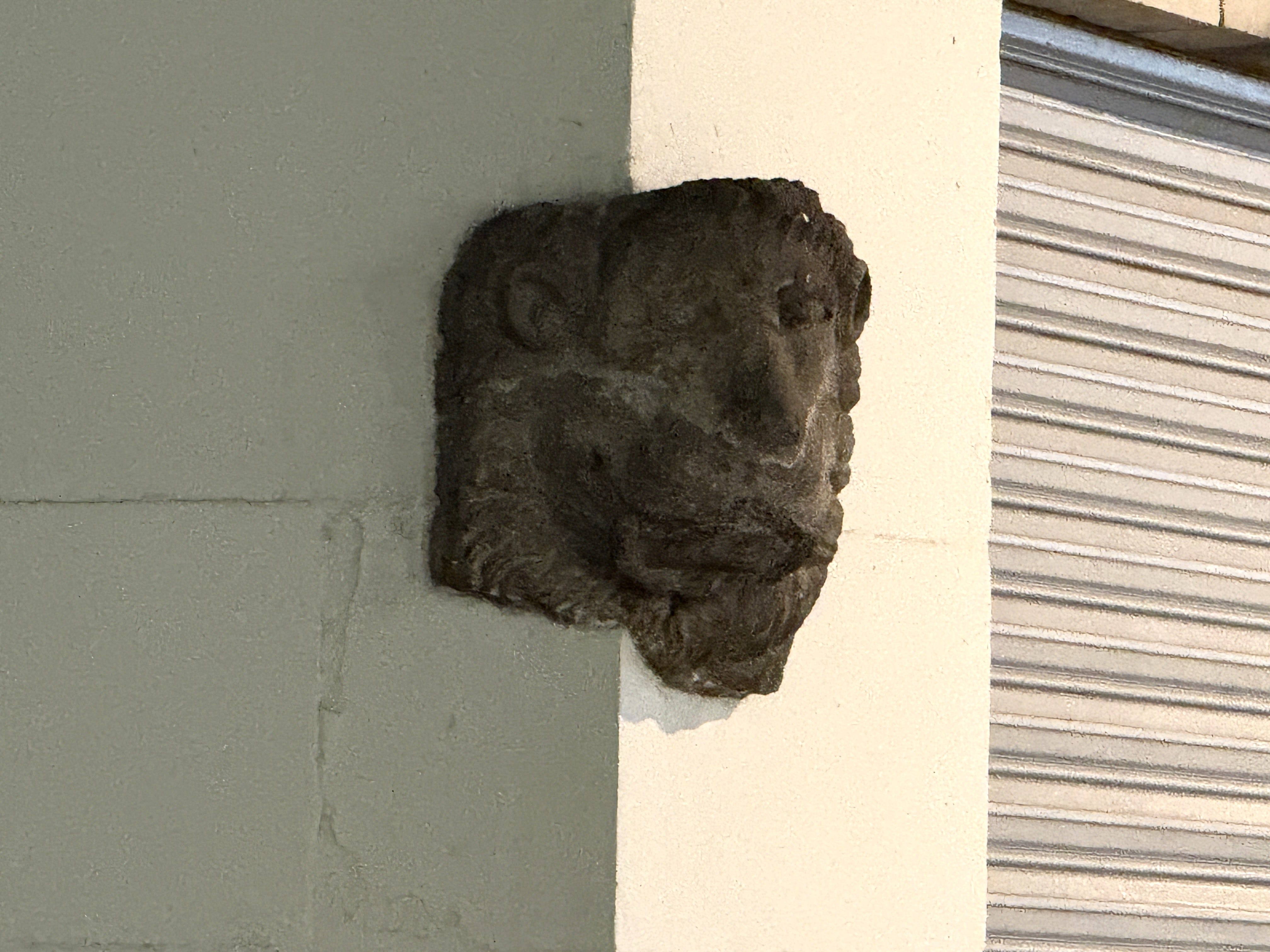
After crossing Calle de Bolivar, walk to the end of the next block and look for the📱Cabeza de León on the northeast corner of Calle de Motolinia and Avenida Francisco I. Madero (on your right). It’s a small, lion head-shaped statue on the corner of the building commemorating the depth of the water in the city during the flood of 1629. This flood was so serious and so long-lasting that Mexico almost moved the capital to Puebla.
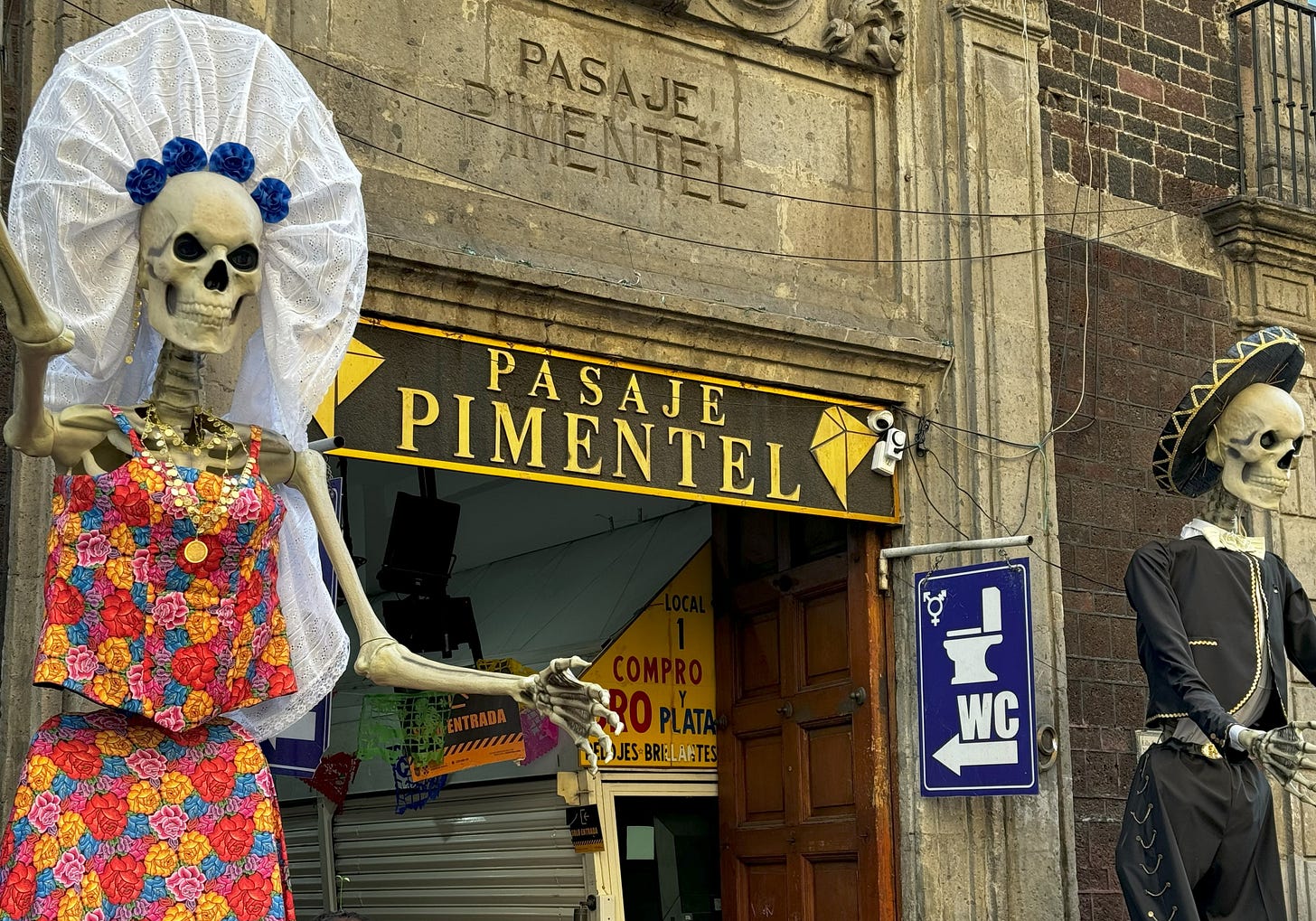
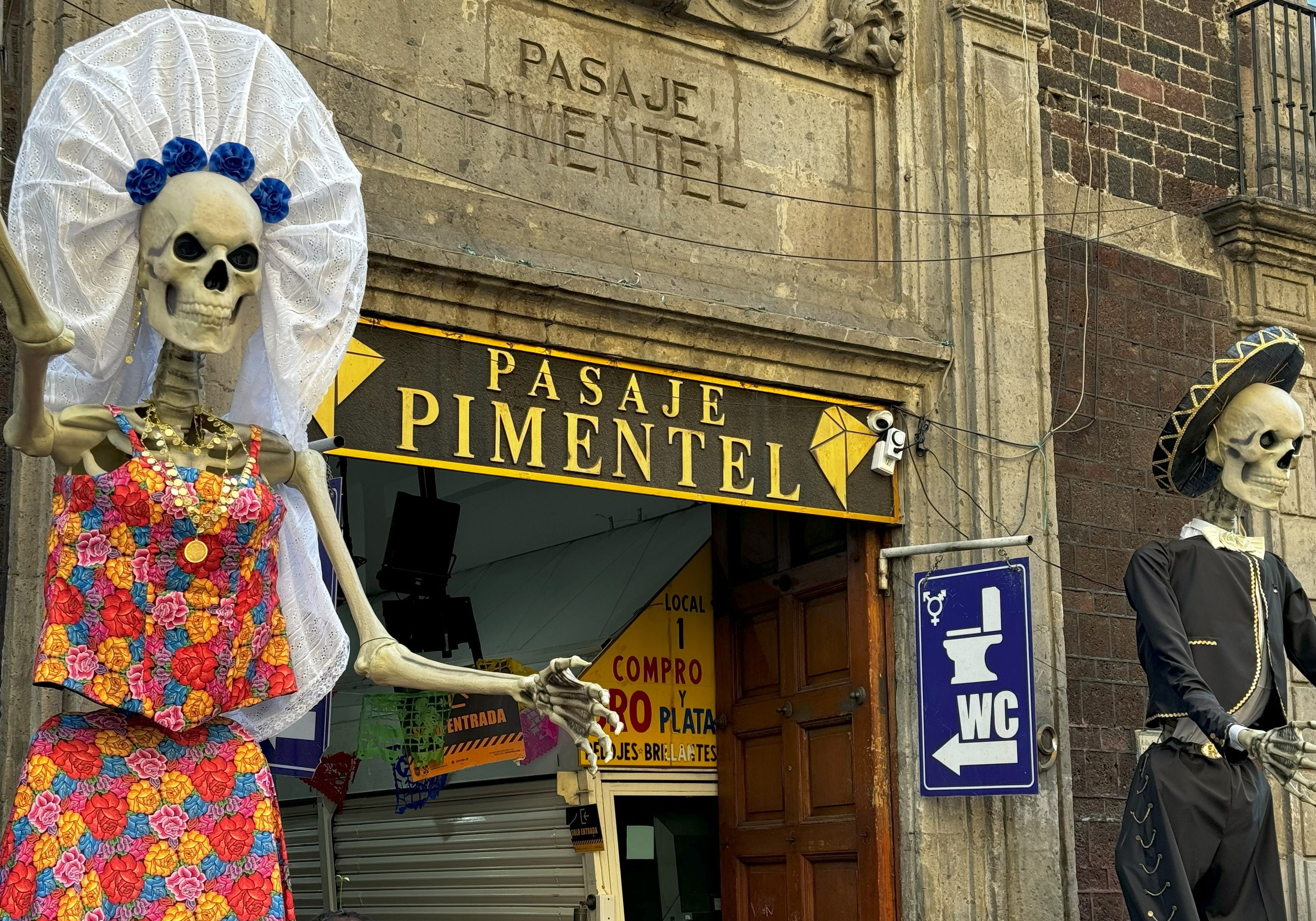
Cross Calle de Motolinia and continue east. Look for📱Pasaje Pimentel on the south (right) side of the street. This is another passage through a building that’s been turned into an indoor shopping center.
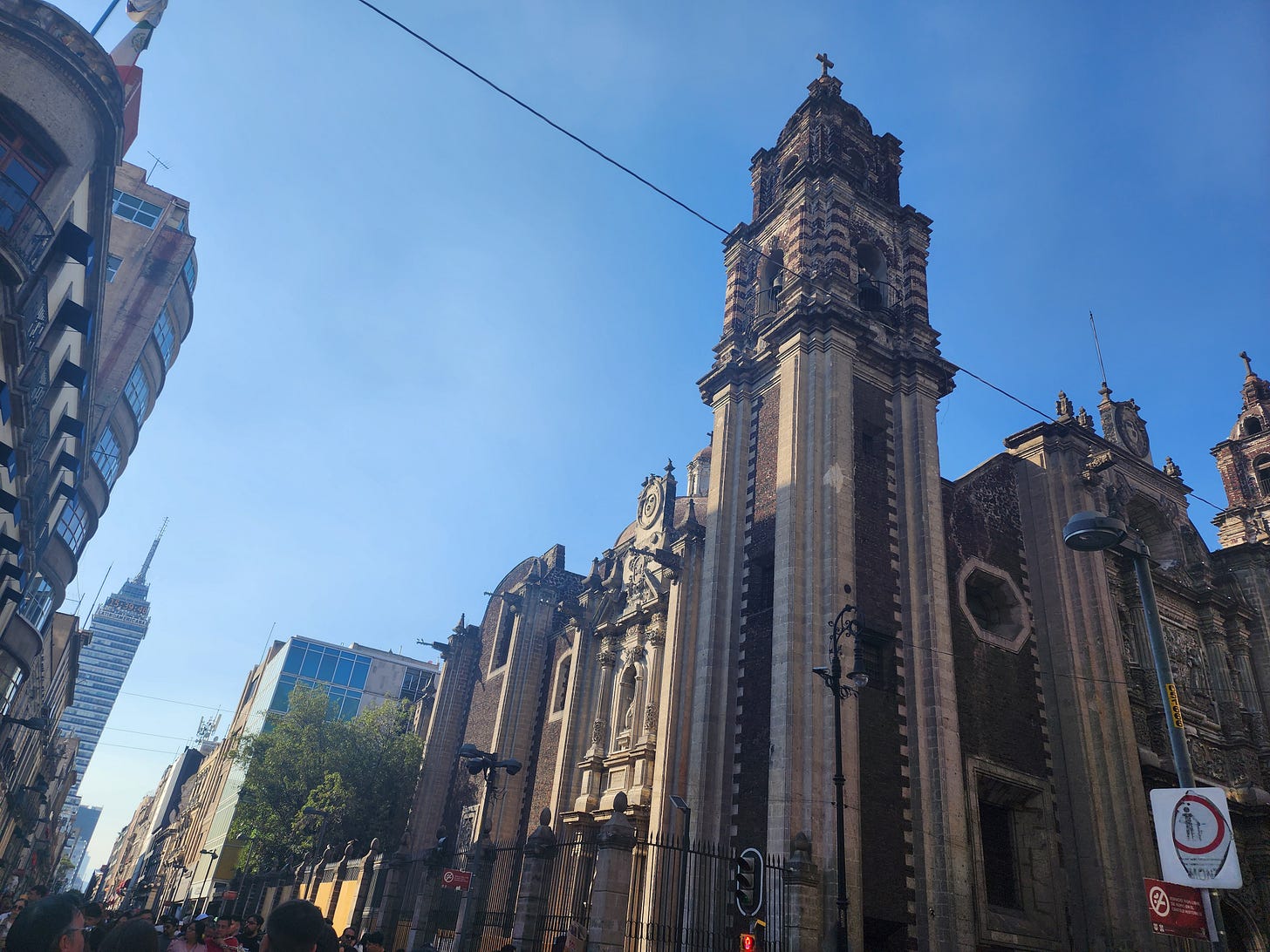
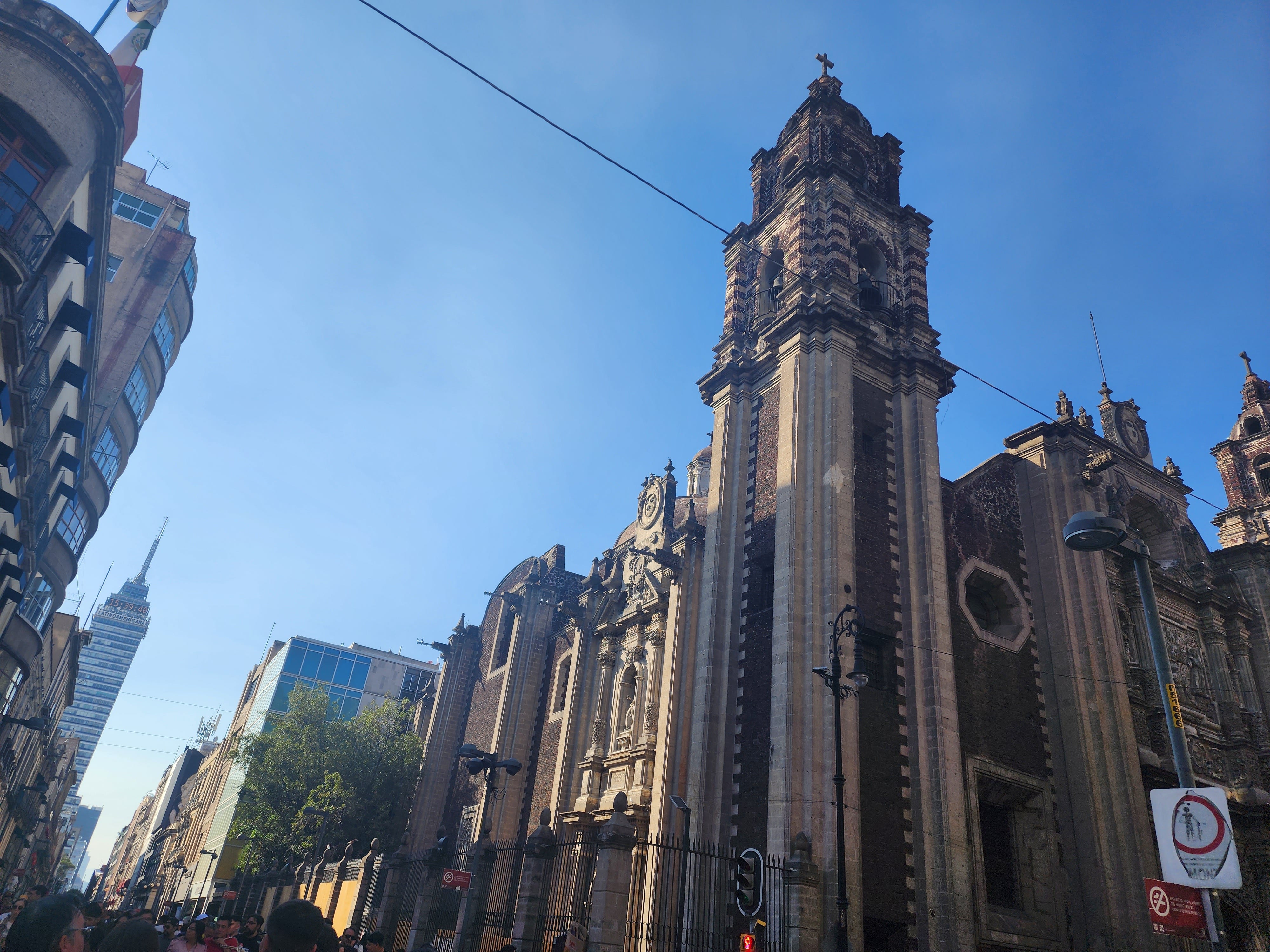
At the end of the block, you will see📱Templo de San Felipe Neri (La Profesa), the Franciscan Church on the northwest corner of the intersection. Look closely at it from different angles. Thanks to earthquakes and the draining of the lake under Mexico City, it is no longer level and is leaning noticeably to one side. The interior is open to the public.
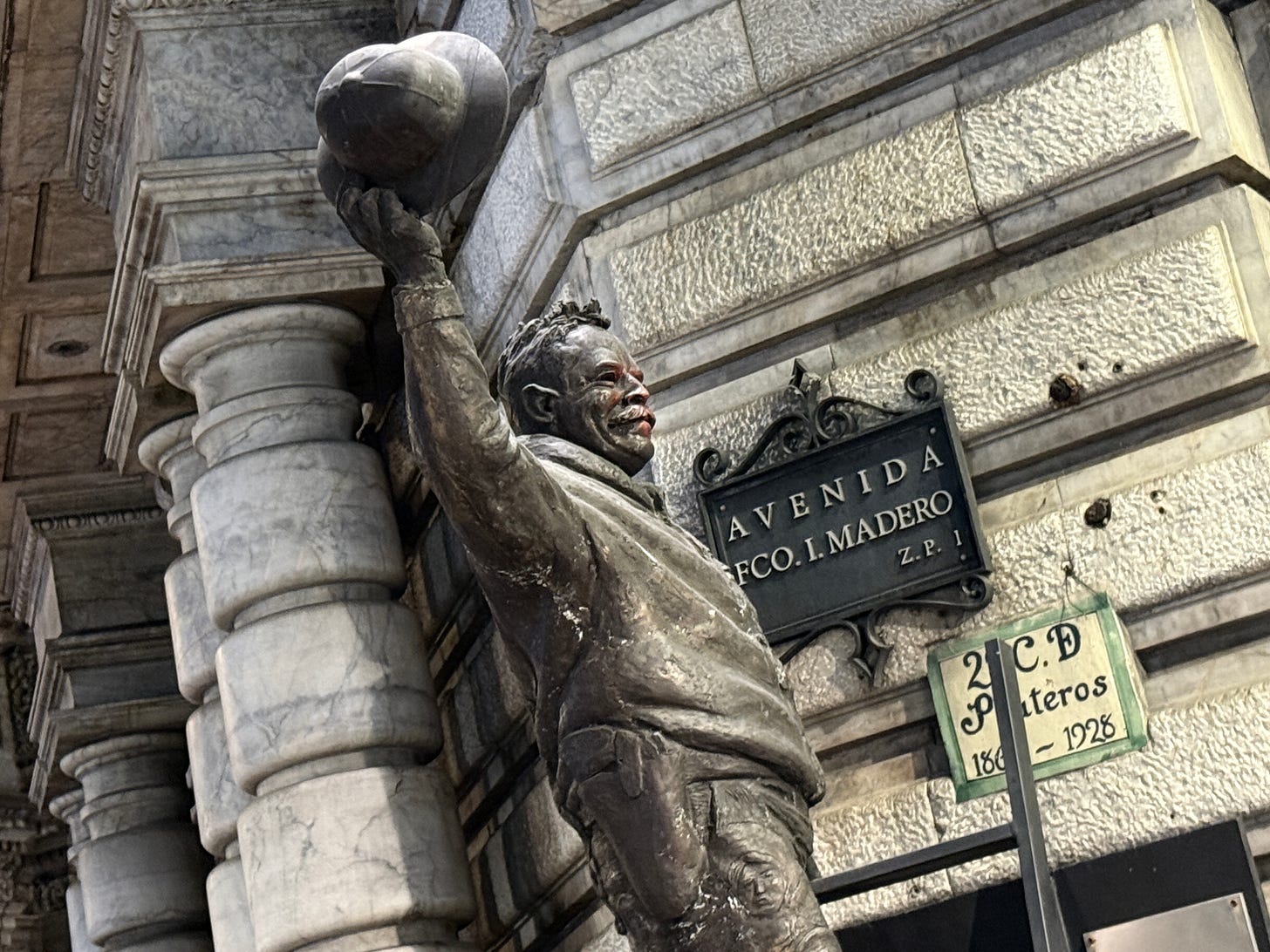
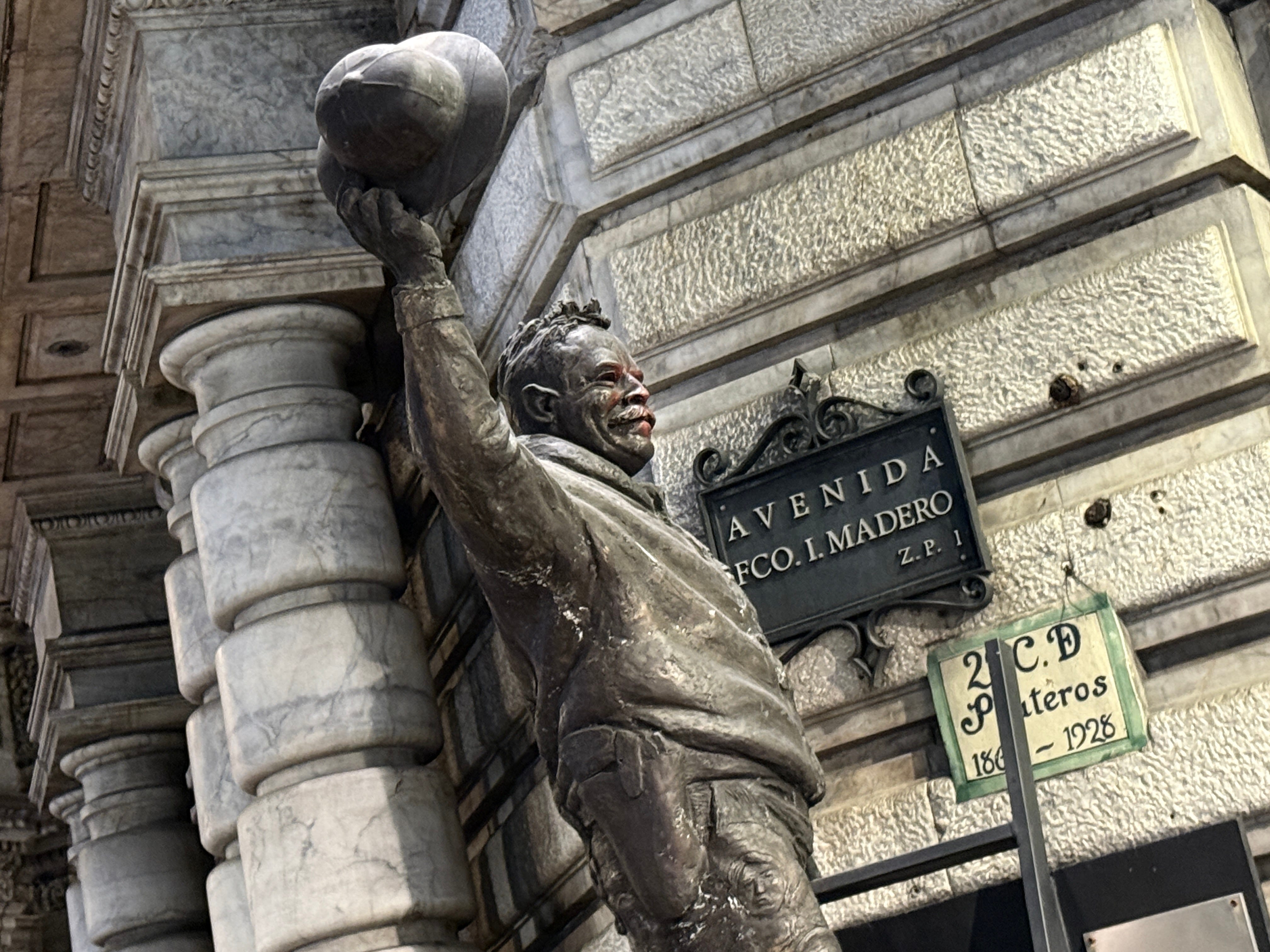
After crossing Calle Isabel La Católica, you will see a statue on the left (north) side of the street. This is the📱Monumento a Pancho Villa, a statue commemorating Francisco “Pancho” Villa, one of Mexico’s most beloved historical figures and a leader of the Mexican Revolution. It’s selfie time!
Across the street to the south is the quirky📱Museo del Estanquillo, an engaging museum of Mexican culture that was once a private collection of photos, movies, art, miniatures, music, and other objects.
The final two blocks are mostly marked by retail shops, mostly uninteresting. The walk ends at the 👁️Plaza de la Constitución, which was recently made pedestrian-only, just like Avenida Francisco I. Madero.
Enjoy the Zócalo! Be sure to explore the Metropolitan Cathedral and the smaller, adjacent church, and see if you can get a seat at the terrace at the Gran Hotel for an arial view of the plaza.
Thanks for exploring Mexico City with 💜 Eternal Spring! Consider becoming a subscriber so you never miss our exclusive tips and guides. — Paul and Steph

